









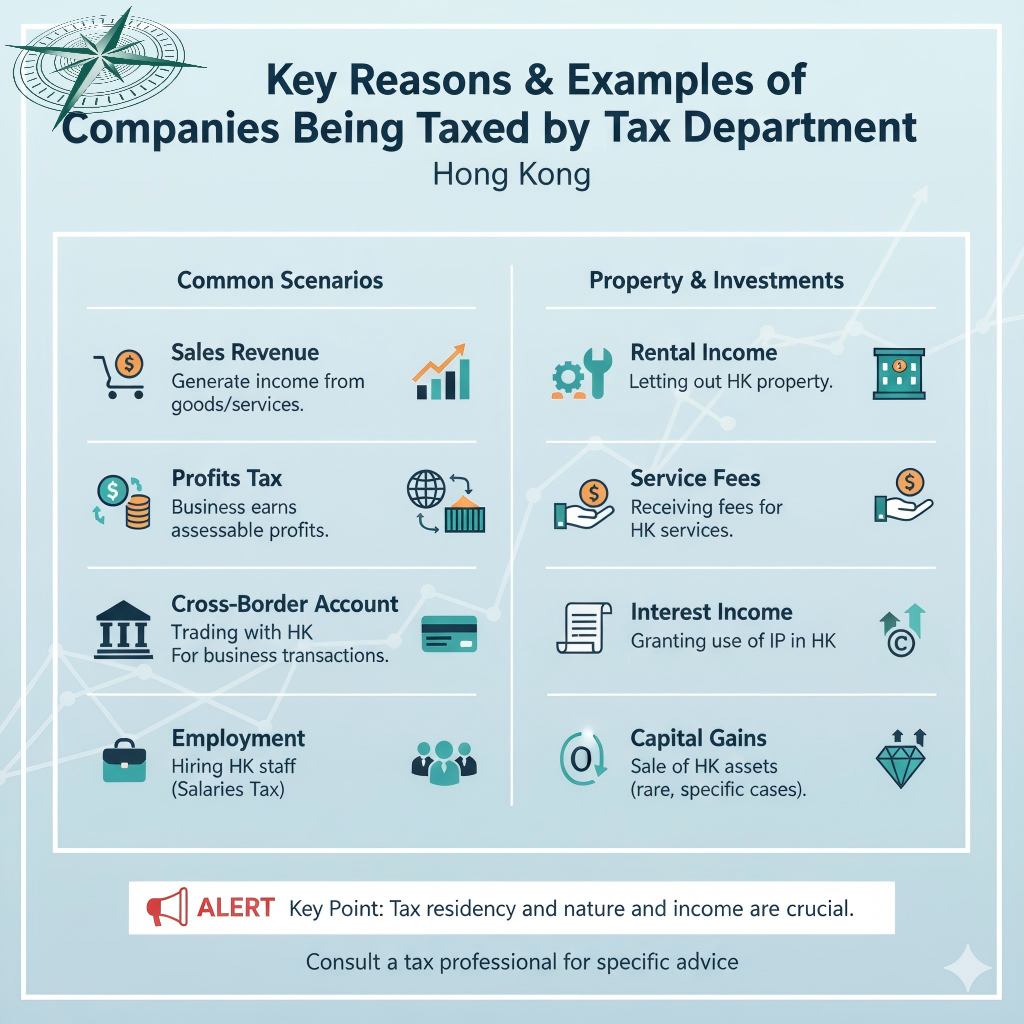
As public attention to Hong Kong tax authorities’ random audits continues to grow, many business owners are exploring ways to avoid unnecessary complications during tax filing, thereby reducing the risk of audits. To help companies better understand and address the challenges of tax audits, we have compiled key tax filing considerations. This article will analyze common issues and critical points to ensure businesses file accurately and in compliance with tax regulations, ultimately minimizing the likelihood of audits.
1. Abnormal gross margin or net margin
The tax authority will analyze and compare the gross and net profit margins of industries based on the tax filing materials received. If a company’s gross or net profit margin in the tax authority’s database is significantly lower than expected, or if these margins fluctuate unreasonably, it may raise suspicions about the authenticity and consistency of its financial records.
For instance, if a retail company’s gross profit margin experiences significant fluctuations over just three years, the tax authority may question the consistency of its accounting practices and conduct further investigations.
2. Long-term loss
When a company continues operating at a loss for years without closing down, this practice often raises suspicions among tax authorities. After all, few businesses would willingly sustain losses indefinitely. Tax authorities tend to scrutinize companies with persistent deficits more closely, particularly when they expand operations or upgrade facilities despite financial losses—such as relocating to upscale areas or significantly increasing staff numbers. These changes may prompt tax authorities to question the accuracy of the company’s reported business activities.
For instance, a restaurant chain reported losses for five consecutive years, yet during this period, it not only expanded its operations with multiple branches but also undertook extensive renovations. Such practices could raise the tax authorities’ suspicions about its actual financial health.
3. Abnormal expenditure items
If a company incurs sudden large expenditures or unusual transactions—such as entertainment, travel, or employee benefits—exceeding industry benchmarks, this may raise suspicions with the tax authorities.
Example: A small-to-medium-sized enterprise experienced a sudden and significant increase in social entertainment and travel expenses during a given fiscal year, far exceeding the industry average. For instance, the company reported a threefold rise in social entertainment costs compared to the previous year, while other firms in the same industry only saw modest increases. Such an unusual pattern may raise suspicions among tax authorities about potential expense falsification to reduce tax liabilities.
4. Related Party Transactions
According to accounting standards, related-party transactions must be disclosed in financial statements. When reviewing tax returns, the tax authority examines whether these transactions align with the principle of commercial reality. If a company pays substantial management fees to affiliated entities annually without clearly defined service scopes or fee standards, the tax authority will conduct a thorough audit.
For instance, a manufacturing company pays substantial management fees to its affiliated logistics provider annually without clearly defining the scope of services or fee structures, which would raise significant concerns with tax authorities.
5. Advisory fees, management fees, or commissions
Some companies establish offshore entities to deduct expenses under the guise of advisory fees, management fees, or commissions, aiming to reduce their tax burden. However, when such services are provided outside Hong Kong and the recipients are exempt from local taxation, the Inland Revenue Department will rigorously examine the authenticity, legitimacy, and commercial viability of these charges.
For instance, a tech company pays substantial annual advisory fees to its parent company based in the Cayman Islands, yet these services are not actually provided outside Hong Kong, which would trigger a thorough audit by the tax authorities.
6. Tax Department’s On-site Observation of Risks in Non-compliant Income Reporting
The tax authority will verify whether a company’s reported operating income aligns with its actual performance. If on-site inspections—such as headcount verification at a snack bar—reveal discrepancies between the calculated revenue and the company’s declared figures, this may raise suspicions that the company has omitted or misreported cash income.
For instance, during an on-site inspection at a snack shop, the tax authority found that the turnover calculated based on foot traffic was significantly higher than the company’s declared income. This discrepancy may raise suspicions about potential irregularities in the reported cash income.
7. Long-term increase in accounts payable
The tax authority will scrutinize whether a company’s accounts payable align with its actual business operations. If accounts payable show a prolonged increase without corresponding business growth, this may raise the tax authority’s suspicion.
For example, a manufacturing company’s accounts payable have been rising for several consecutive quarters despite no significant increase in material procurement, which could raise suspicions from the tax authorities about potential falsification or other irregularities.
8. A significant drop in income
Tax authorities typically assess taxpayers ‘industry prospects based on internal information to evaluate the reasonableness of their declared profits. If they identify a booming industry alongside a company’s consecutive sharp revenue declines, they may suspect profit shifting or underreporting and conduct further investigations.
For instance, if an electronics company reports consecutive annual revenue declines during a booming industry period, the tax authority may suspect profit shifting to affiliated entities or underreporting income, prompting an investigation.
9. Inconsistent or incorrect items
If a company’s financial statements contain significant errors or inconsistencies, the tax authority may conduct further reviews to verify the accuracy of the reported data.
For instance, if a company’s financial statements show inconsistent data across different years or contradict each other within the same year, this will draw the attention of the tax authorities.
10. Reported or complained about
When the tax authority receives a report or complaint alleging tax fraud or other illegal activities by a company, it will conduct an investigation to verify the allegations.
For example, if a company is reported by former employees for large-scale income concealment, the tax authority will investigate based on the reported information.
Summary
Understanding potential triggers for Hong Kong Inland Revenue Department (IRD) audits is critical for businesses. Companies must maintain sound financial discipline, ensure accurate and transparent accounting, and comply with tax regulations. By leveraging professional accounting, tax planning, and auditing services, businesses can better prepare and manage their financial operations, minimize audit risks, and ensure tax filings meet all regulatory requirements.