









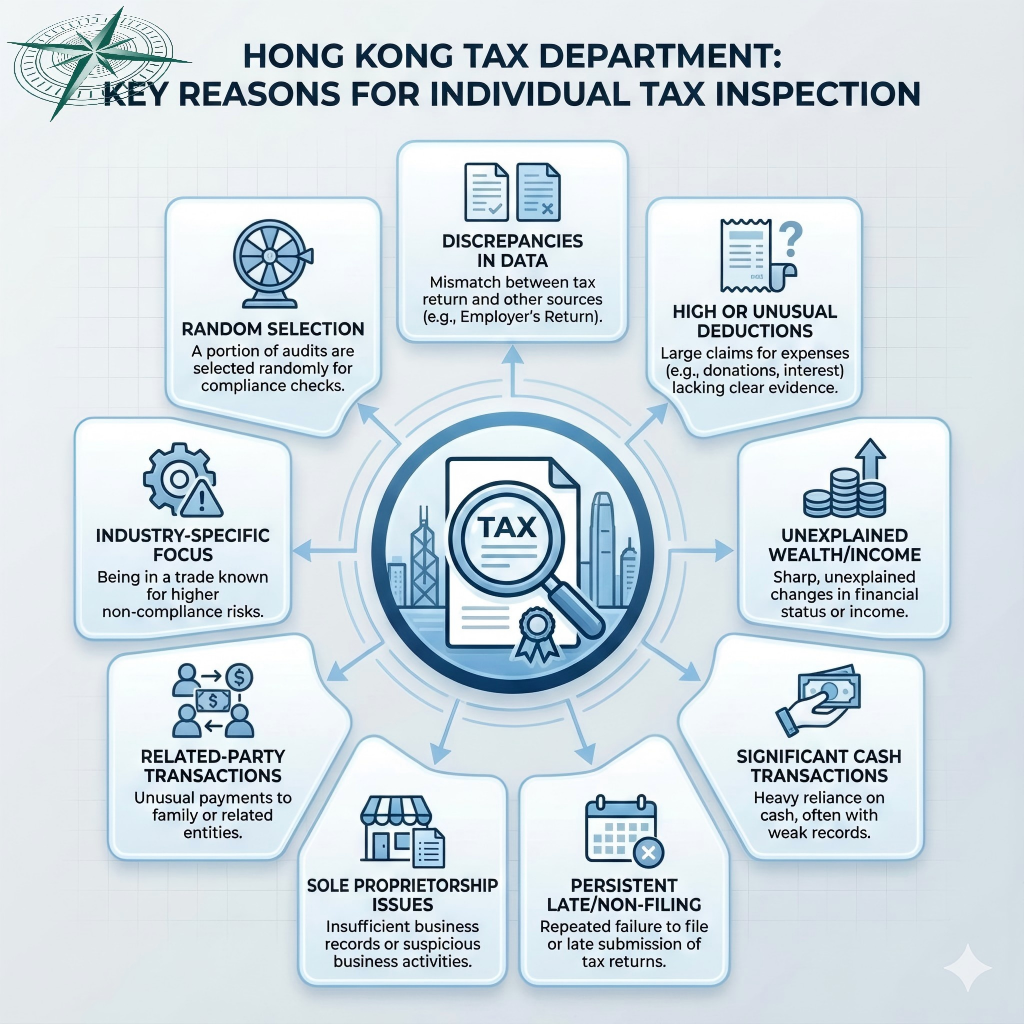
Under the Inland Revenue Ordinance (Cap. 112), every taxpayer in Hong Kong is required to accurately and timely declare their income. However, individuals may occasionally be subject to tax audits by the Inland Revenue Department for various reasons. This article examines common causes and relevant Hong Kong cases to help readers understand the circumstances of being audited in the region.
1. Inappropriate ratio of income to assets
Reason: The tax authority will pay special attention to cases where there is a significant discrepancy between the declared income and the actual income. For example, if the declared income does not align with the individual’s lifestyle or financial status.
Example: A self-employed individual declared an annual income of HKD 300,000, yet owned multiple high-value properties and lived a lavish lifestyle. The Inland Revenue Department found discrepancies between the declared income and his actual living standards, leading to a thorough investigation. The investigation ultimately revealed that the individual had undisclosed investment gains.
2. Frequently fails to submit tax returns on time
Reason: Under Article 51 of the Tax Regulations, taxpayers are required to file tax returns on time. Failure to do so will draw the attention of the tax authorities.
Example: A taxpayer who had failed to file tax returns on time for years was subjected to a comprehensive audit by the tax authority. The investigation revealed that the taxpayer had underreported rental income for multiple years, resulting in the recovery of taxes and a fine.
3. Abnormal Deduction Items
Reason: Some taxpayers may attempt to reduce their tax liability by overstating deductible expenses. The tax authorities will scrutinize these unusually high deductions.
Example: A taxpayer claimed a HKD 200,000 deduction for professional development expenses but failed to provide supporting invoices or documentation. The Inland Revenue Department later verified that the actual expenditure was only HKD 50,000, with the remaining amount being a fraudulent claim.
4. The employer’s declared salary differs from the individual’s self-declared amount
The reason is that the tax authority pays special attention to discrepancies between the employer-reported salary and the individual-reported salary.
Example: An individual declared an annual income of HKD 500,000, but their employer reported a salary of HKD 1 million to the tax authorities. The investigation revealed that the person had intentionally concealed part of their income during tax filing.
5. False reporting of family status
Reason: Taxpayers who falsify their family status to obtain greater tax deductions will face rigorous scrutiny by the tax authorities.
Example: A taxpayer claimed a tax exemption for their parents, but the parents were not actually residing in Hong Kong, making the claim invalid. The tax authority investigated and found that the taxpayer could not provide proof of their parents’ residence in Hong Kong. As a result, the tax exemption was revoked, and the taxpayer was required to pay the corresponding tax.
6. Frequently update tax returns
Reason: Frequent changes to tax return data may raise suspicions from the tax authorities, suggesting the taxpayer is attempting to evade or reduce tax obligations.
Example: A taxpayer repeatedly altered their income and deductions, with each revised amount showing significant discrepancies. The tax authority’s investigation revealed that the taxpayer had attempted multiple times to reduce their tax liability by manipulating the data.
7. Overuse of tax relief and incentives
Reason: Overuse or misuse of tax relief and preferential policies may raise suspicion from tax authorities.
Example: A taxpayer established a sole proprietorship and deliberately fabricated losses to reduce personal income tax. By consistently reporting these losses, the taxpayer significantly reduced their tax liability. The tax authority investigated and found that the losses were fabricated through overstated expenses and other deceptive practices, prompting a thorough review of the case.
8. Receiving reports from third parties
Reason: The tax authority may occasionally receive third-party reports alleging tax evasion or false income declarations.
Example: A former employee reported that their former employer had concealed part of their income during tax filing, prompting the tax authority to conduct an investigation. The investigation revealed that the employer had falsified expenses to reduce taxable income, resulting in the recovery of taxes and a fine.
Summary
Under the Tax Regulations, taxpayers must accurately, completely, and promptly declare their taxable income to avoid tax audit risks. Understanding these common causes and related tax provisions helps individuals better fulfill their tax obligations and avoid unnecessary complications. Maintaining proper financial records and ensuring the authenticity and accuracy of all declared information are essential for effectively preventing tax audit risks.